Why Is the Adjuster Asking You to Get More Bids?
Your insurance policy generally provides that the insurer will pay the reasonable and necessary cost to repair or replace covered property damage.
Can the Adjuster Require You to Obtain a Repair Bid?
Generally, no. It is ordinarily the insurer’s responsibility to investigate the loss and determine the reasonable cost of covered repairs.
There may be exceptions. For example, some appraisal provisions require the policyholder to provide an estimate—or its equivalent—before demanding appraisal. Always read the particular language of your policy.
What Does the Insurance Company Owe?
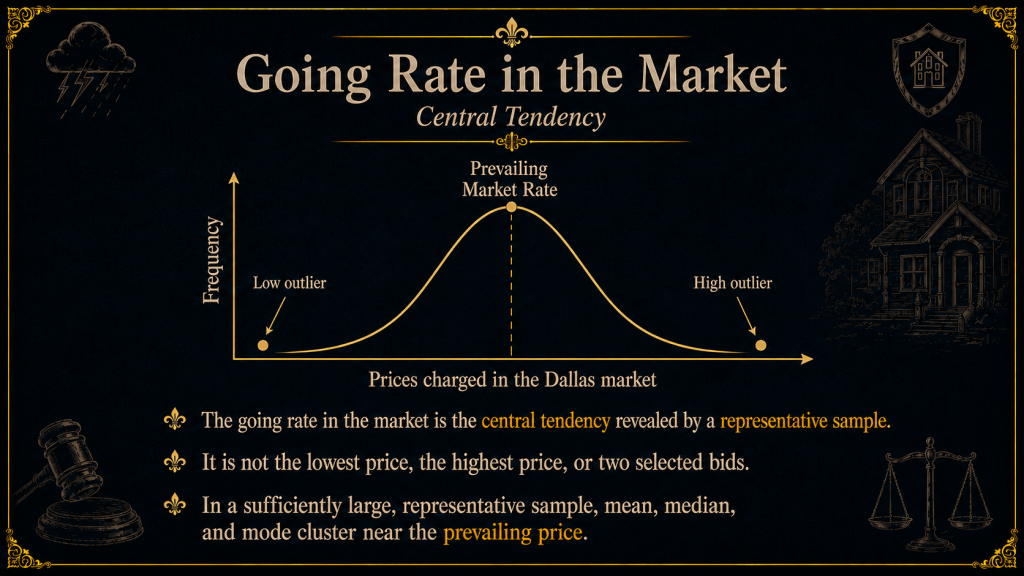
The insurer must account for costs that you are reasonably likely to incur in your geographic market when repairing or replacing the covered damage. In practical terms, that means paying a reasonable market rate for the necessary work—not simply searching for the lowest available bid.
Requesting three bids does not necessarily establish the market rate. Three contractors are not a representative sample of the thousands of contractors working in a large metropolitan area. The insurer also may not tell you whether it will accept those bids as evidence of the reasonable cost of repairs.
That raises an important question:
Why is the adjuster asking you to obtain bids if the insurer has not agreed to accept the results?
The process can become a one-sided bet. If a contractor’s bid is lower than the adjuster’s estimate, the insurer may rely on it to reduce the claim. If the bid is higher, the insurer may reject it as excessive.
Don’t Be Fooled by the Lowest Bid
There will almost always be someone willing to perform work for less. But a lower bid may omit necessary materials, labor, building-code requirements, or proper methods of repair.
A low bid is not evidence of a reasonable repair cost if it does not include everything required to restore the damaged property properly.
The demand for additional bids can also create a wedge between you and your chosen contractor. The adjuster may suggest that your contractor’s price is preventing the work from moving forward when the real disagreement concerns whether the insurer’s estimate includes the full scope and reasonable cost of the necessary repairs.
Your policy does not promise to pay the lowest bid—or the highest. It promises to pay the reasonable and necessary cost of repairing or replacing covered property.
The issue is not whether someone can be found to do the work for less. The issue is what it will reasonably cost to complete all covered repairs properly.
Disclaimer
This article is for informational purposes only and not for the purpose of providing legal advice. You should contact your attorney to obtain advice with respect to any particular issue or problem. Use of and access to this article or any of the e-mail links contained within the site do not create an attorney-client relationship between Thomas W. Hamrick and the user or browser. The opinions expressed in this article are the opinions of the individual author and may not reflect the opinions of other lawyers.

 Coffee with Tom