
If you’re filing a home insurance claim, you’ve probably heard that you need to give your carrier ‘prompt notice.’ But what exactly does that mean, what is the first step, who do you contact, how do you find them, and what questions are they going to ask?
What is a policyholder’s first step after discovering property damage?
The first thing you should do after discovering damage is to call your insurance company and give notice. Don’t wait—time matters.
Practice Pointer: Most of the questions you’re going to have about your insurance claim are discussed in your policy. Read your policy.
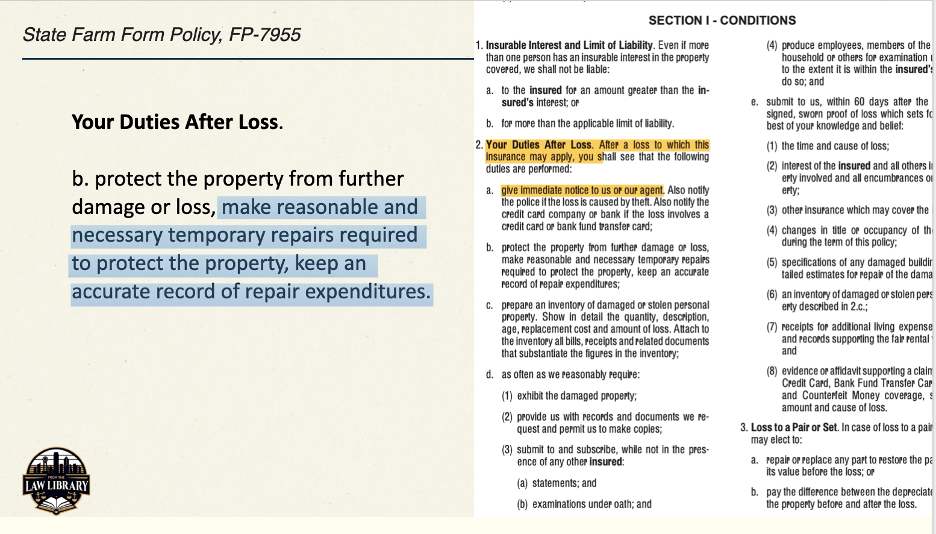
A policy might explain: “After a loss . . . give immediate notice to us or our agent.”
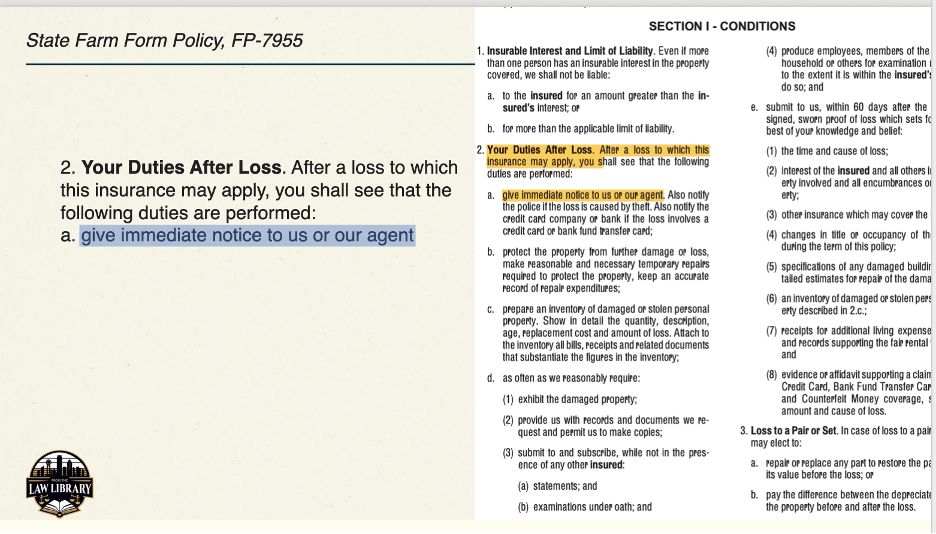
Even if the company already has your information on file, you still need to understand what your policy says—because it governs what happens next.
How do I contact my insurance company?
Most policies will tell you exactly how to give notice—and to whom. That section is usually titled “Duties After Loss” or something similar. In many cases, you can call the company directly, use their mobile app, or contact your local agent.
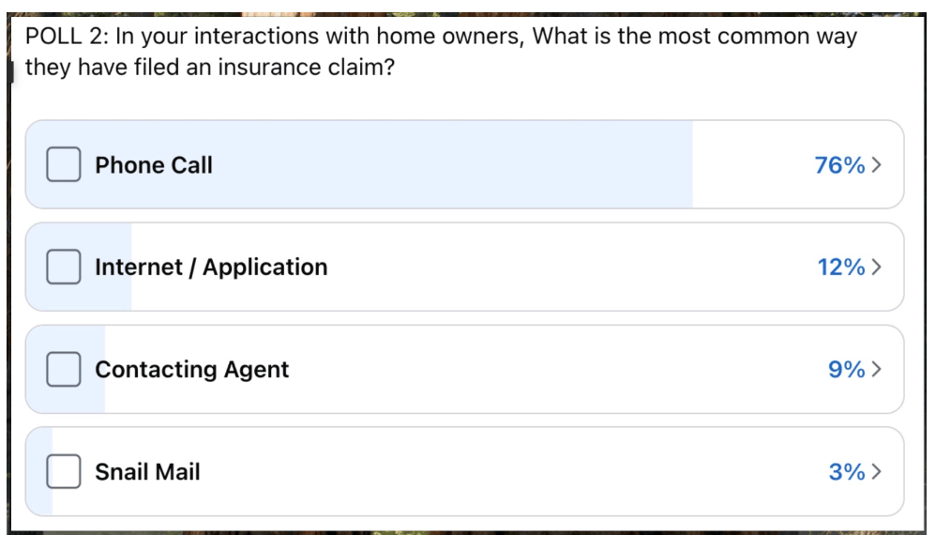
Exploratory Poll (small sample)
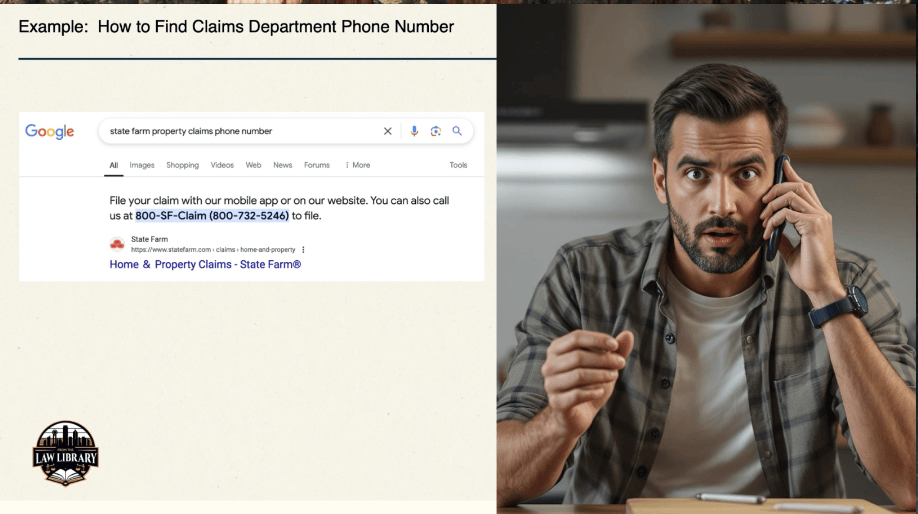
Example of Google Search: State Farm property claims phone number.
What Questions Will My Insurance Company Ask When I File a Claim?
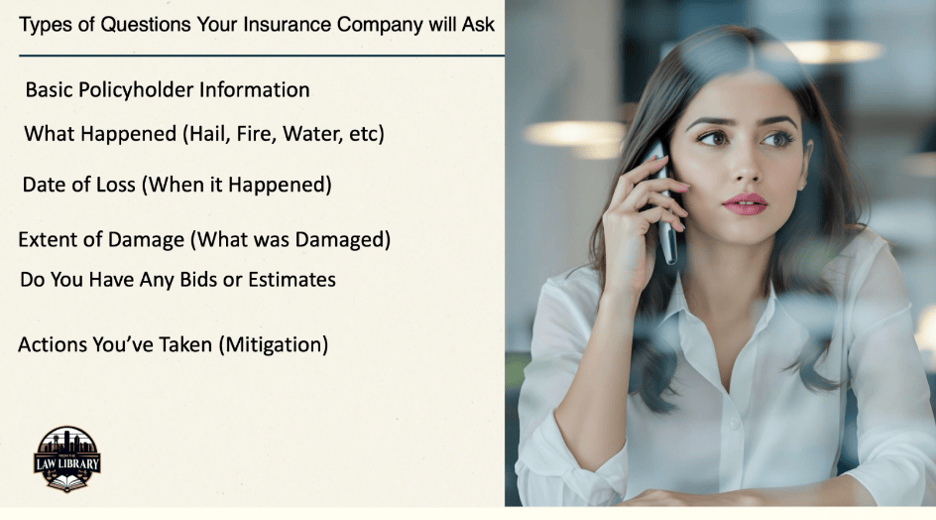
When you give notice, expect to answer basic questions about the loss:
- Your contact and policyholder information
- What happened (e.g., hail, fire, water damage)
- When it happened (date of loss)
- What was damaged (roof, interior, etc.)
- Whether you have any bids or estimates
- What steps you’ve taken to prevent more damage (mitigation)
Here’s a quick visual summary:
It’s okay if you don’t have every detail nailed down yet. You’re not expected to know the full scope of the damage on day one. But don’t guess. If you’re unsure about something, just say so.
And always ask for a claim number, and write down who you spoke with and when.
“Why the Date of Loss Is Critical in a Homeowners Insurance Claim”
Out of all the questions your insurance company will ask, the date of loss is one of the most critical. That’s because the date determines which version of your policy applies—and which coverage rules, exclusions, or deadlines control your claim.
It also affects:
- Timeliness: The carrier will compare the date of loss to when you reported the claim. If there’s a long delay, they may raise late notice as a defense.
- Coverage period: If your damage occurred outside the policy term—even by a few days—it could result in a denial.
- Cause of damage: Some weather-related losses (like hail) can be tied to specific storm events. The date helps the carrier verify what happened and when.
If you’re not sure when the damage occurred—especially for things like roof leaks or gradual water damage—it’s okay to say that. But don’t guess. You can describe when you first noticed it or when you believe it likely occurred.
One reason the date of loss matters is because most policies limit coverage to damage that “occurs during the period this policy is in effect.” That means if the loss happened before the policy started—or after it ended—it won’t be covered.
Example:
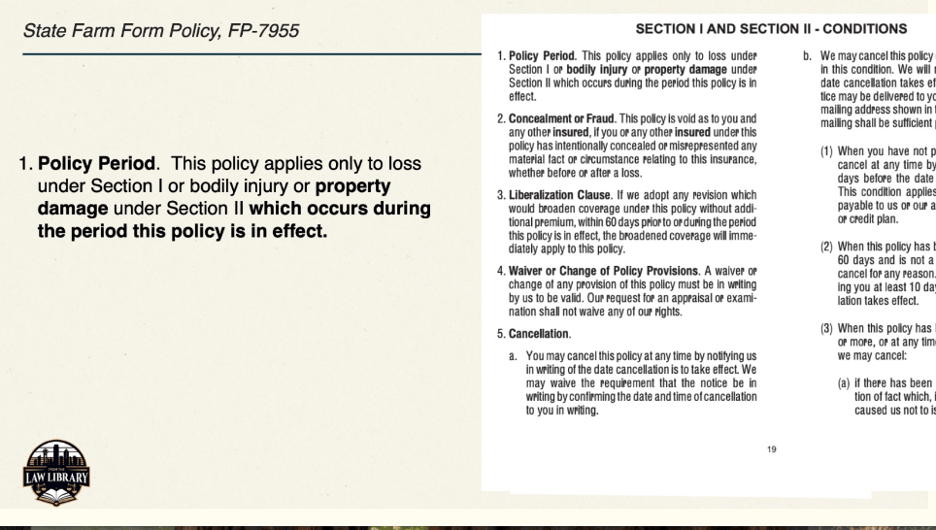

Most Policyholders have difficulty identifying a wind and hail date of loss.
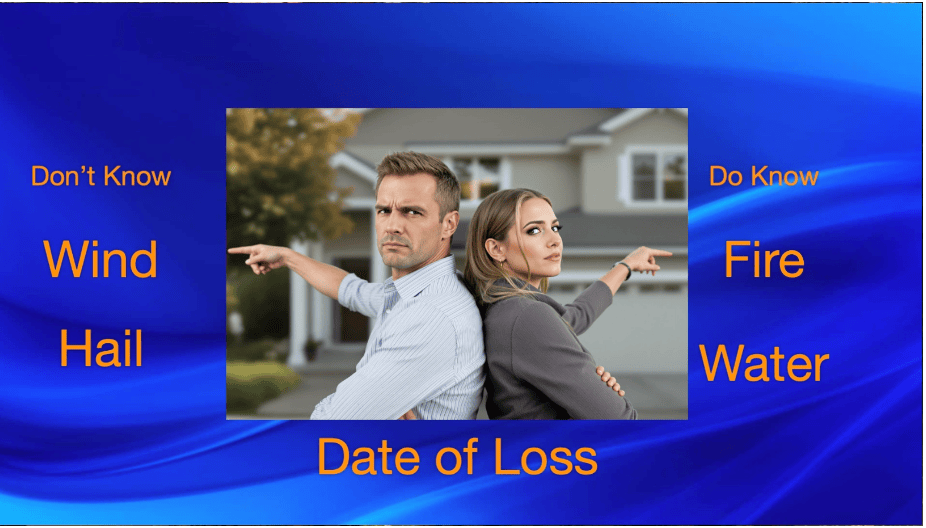
“What If I Don’t Know the Exact Date of Loss for My Insurance Claim?”
Not every type of damage has a clear, obvious date. Fires and floods are easy to pinpoint—but roof leaks, slow-developing water damage, or even hail impacts may not show themselves right away.
If you’re unsure when the damage occurred, there are resources that can help:
- Your contractor or roofer may be able to identify when the damage likely happened based on wear patterns, impact marks, or material failure.
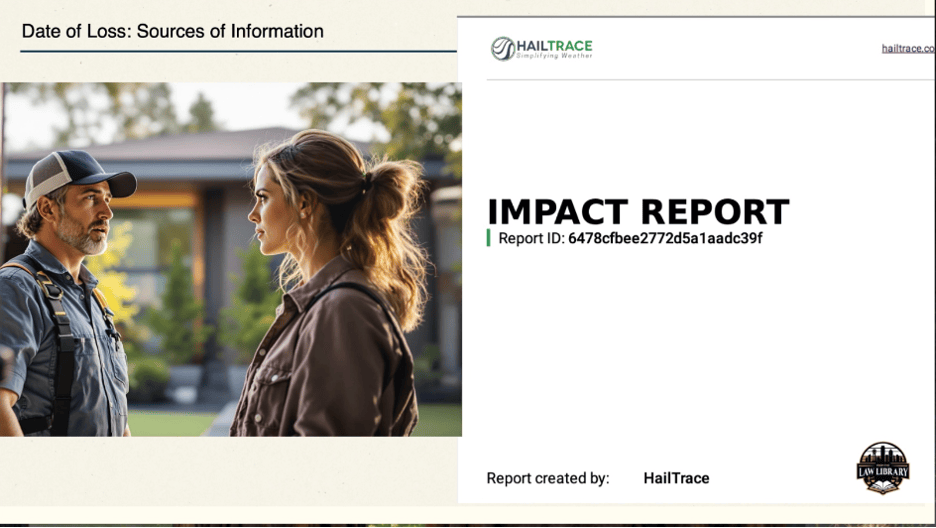
- Weather reports and third-party storm tracking services can link your address to specific events—like a hailstorm or wind event—on a certain date.
- Neighbors or service providers (like a lawn crew or real estate agent) might have seen or documented storm damage around the same time.
“How Do I Describe the Damage When Filing a Home Insurance Claim?”
Once you’ve identified when the damage occurred, the next thing your insurance company will want to know is what exactly was damaged. This can feel overwhelming—especially if you’re still figuring it out yourself—but you don’t have to get everything perfect right away.
Just focus on describing the obvious damage as clearly as possible. For example:
- Water coming through the ceiling
- Missing shingles or roof impact marks
- Fire or smoke damage in a specific room
- Collapsed drywall, mold, or standing water
The carrier isn’t expecting a full inspection report on day one—but they do need a basic understanding of what you’re claiming. You can always supplement the description later as more information becomes available.

Have a qualified contractor or service provider inspect and identify damage.
Ask for an estimate that itemizes the damage, necessary components to repair or replace the damage, and the cost.
“What Is My Duty to Prevent Further Damage After a Loss?”
Most policies include language like this:
“Protect the property from further damage or loss, make reasonable and necessary temporary repairs required to protect the property, [and] keep an accurate record of repair expenditures.”
That means it’s not just smart to tarp the roof or shut off a leaking valve—it’s required. If you fail to take reasonable steps to prevent further damage, your claim could be reduced—or denied entirely.
Disclaimer: This article is for general informational purposes only and does not constitute legal advice. Every claim is different. For questions about your specific situation, consult a qualified attorney.
Thomas W. Hamrick, Attorney at Law, Senior Counsel, DFW Area, Texas (214) 396-7676

 Coffee with Tom