What Happens When One Party Refuses to Appoint an Appraiser?
State Farm Lloyds v. Johnson established an important point in Texas appraisal law: as a general rule, a dispute over coverage does not excuse an insurer from participating in appraisal.
But a practical problem remains:
What happens when one party simply refuses to appoint an appraiser?
That issue was addressed in Charter Oak Fire Insurance Co. v. Shamrock Steel Sales, Inc., No. MO:18-CV-00111-DC, 2019 WL 10351608 (W.D. Tex. Jan. 3, 2019).
Charter Oak was not a published appellate opinion. It was an order entered by United States District Judge David Counts of the Western District of Texas, Midland-Odessa Division, during an ongoing federal district-court case.
More specifically, Charter Oak sought to set aside the state court’s appointment of the umpire and to abate the ongoing appraisal. Judge Counts denied the challenge to the umpire appointment and allowed the appraisal to continue.
What Happened?
After appraisal was invoked, Charter Oak failed to timely appoint an appraiser.
The insured proceeded under the appraisal provision and ultimately obtained the appointment of an umpire from a Texas state district court judge.
Charter Oak then went to federal court and asked Judge Counts to set aside that appointment and to abate the ongoing appraisal.
Judge Counts refused.
He concluded that the insured had properly proceeded under the appraisal provision and left the state court’s appointment of the umpire in place.
Start With the Appraisal Clause
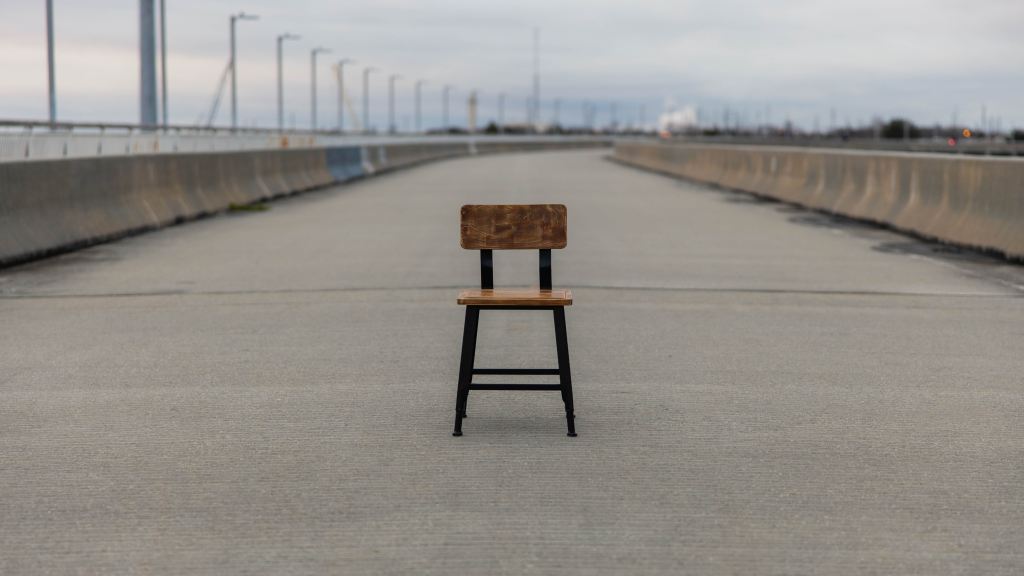
Empty-chair appraisal is not an invitation to improvise.
The first question is always:
What does this particular appraisal clause require?
Pay careful attention to:
- the time allowed to appoint an appraiser;
- the time allowed for the appraisers to agree upon an umpire;
- when judicial appointment of an umpire becomes available; and
- any contractual notice requirements that must be satisfied before seeking judicial intervention.
In Charter Oak, those contractual deadlines mattered. The insured invoked appraisal, Charter Oak failed to appoint an appraiser within the time allowed, and the insured proceeded to the next step contemplated by the appraisal provision.
The point is simple:
Follow the appraisal clause.
What About Due Process and Notice?
This is where Charter Oak becomes particularly interesting.
Charter Oak argued that the procedure resulting in the state court’s appointment of the umpire deprived it of adequate notice or an opportunity to participate.
Judge Counts rejected that challenge.
An important part of the reasoning was that Charter Oak already knew appraisal had been invoked. The policy itself supplied the timetable governing the appraisal process. Having received the appraisal demand, Charter Oak could determine where the process stood by applying the deadlines contained in its own policy.
But there is an additional factual detail that should not be overlooked:
The insured also gave Charter Oak contemporaneous notice that it was seeking judicial appointment of the umpire.
That distinction matters.
The court did not treat some separate advance notice requirement as an additional contractual condition that had to be satisfied before the insured could seek judicial appointment.
Nevertheless, as a matter of fact, the insured did notify Charter Oak of the request for judicial appointment when the request was made.
From a practice standpoint, that was the prudent course.
Practice Pointer: Give Notice Anyway
Even if the appraisal provision does not expressly require separate notice before seeking judicial appointment of an umpire, I would create a clean written record.
At a minimum, I would contemporaneously provide notice of the request and include:
- the insured’s name;
- the claim number;
- a copy of the appraisal clause;
- a copy of the appraisal demand;
- proof of when and how the appraisal demand was sent;
- the fact that the contractual deadline has expired; and
- the court from which judicial appointment of the umpire is being sought.
Why create an unnecessary procedural fight?
If a court later determines that additional notice was not legally required, nothing has been lost. But if notice becomes part of a due-process challenge, the record is already there.
Do Not Assume Every Appraisal Clause Is the Same
They are not.
Some policies contain materially different appraisal language. Certain policies may make appraisal contingent upon mutual agreement. Others may contain different deadlines or additional procedural requirements governing judicial appointment of an umpire.
The particular appraisal clause controls.
Read it before taking the next step.
The Larger Point
A party ordinarily should not be able to defeat appraisal simply by refusing to occupy its chair.
Charter Oak provides a useful example. The insurer failed to appoint an appraiser within the contractual process. The insured proceeded, a state district court judge appointed the umpire, and Charter Oak then sought to set aside that appointment and to abate the ongoing appraisal.
Judge Counts declined to do so.
But the lesson is not that an insured may simply ignore the absent party and make up its own procedure.
It is nearly the opposite.
An empty-chair appraisal works only if the party proceeding without its opponent carefully follows the appraisal clause and creates a record showing that it did so.
Follow the policy. Follow the deadlines. Give notice. Make a record.
Just a thought.
Citation: Charter Oak Fire Insurance Co. v. Shamrock Steel Sales, Inc., No. MO:18-CV-00111-DC, 2019 WL 10351608 (W.D. Tex. Jan. 3, 2019).
Disclaimer
This article is for informational purposes only and not for the purpose of providing legal advice. You should contact your attorney to obtain advice with respect to any particular issue or problem. Use of and access to this article or any of the e-mail links contained within the site do not create an attorney-client relationship between Thomas W. Hamrick and the user or browser. The opinions expressed in this article are the opinions of the individual author and may not reflect the opinions of other lawyers.

 Coffee with Tom