 NFIP claims are unique and only authorize payment of general contractor overhead and profit when certain metrics are satisfied relating to the use of and need for a general contractor. These strict rules ONLY apply to NFIP claims and are not applicable to non-NFIP first-party property claims in Texas.
When Repairs Are Complete
It is tempting for an appraiser, when repairs were completed prior to appraisal (and a price agreed upon between the homeowner and contractor), to assert the amount of loss at issue in the appraisal is equal to the previously agreed upon price. As the Texas Supreme Court explained in 2012, incurred expenses (out-of-pocket costs) alone Do Not establish reasonable costs of repairs.
“We noted that evidence of out-of-pocket costs alone did not establish that the damages were reasonable and necessary. Instead, we found well settled that proof of the amounts charged or paid does not raise an issue of reasonableness, and recovery of such expenses will be denied in the absence of evidence showing that the charges are reasonable.” McGinty v Hennen, 372 S.W.3d 625 (Tex. 2012)(internal citations omitted).
Understanding How an Appraiser Determines Reasonable Costs
[The reasoning discussed below may apply equally when one appraiser brings a ‘bid’ from another contractor to the attention of the panel for the purpose of establishing the amount of loss.]
Repair or replacement costs include any cost that an insured is reasonably likely to incur in repairing or replacing a covered loss. Ghoman v. New Hampshire Ins. Co., 159 F. Supp. 2d 928, 934 (N.D. 2001).
There are two important concepts at work here:
- Appraisers ‘estimate’ damages. Estimation is a hypothetical exercise; and
- Reasonably likely to incur = fair market value; the going or average rate in the market.
Estimation is a Hypothetical Exercise
As to costs, Texas has a long history of applying a reasonable standard based on principles surrounding the determination of fair market value. See Gulf, C & S.F. Ry v Fuller, 63 Tex. 467, 471-72 (1885). Materials and services also have a ‘fair market value.’ The market to be considered should generally be that which the party seeking the materials and services would ordinarily use.
Reasonably Likely to Incur
As noted above, because ‘actual’ costs incurred are not, standing alone, evidence of reasonable (fair market value) costs, we look at what costs a hypothetical insured will likely incur repairing or replacing damaged property, in the geographical area where the damage occurred.
The Limited Applicability of ‘Actual Expenses Incurred.’
The issue for the panel becomes how much weight should be given to actual expenses incurred (or bids). As already noted, standing alone, prior out-of-pocket costs [or bids] do not establish they are reasonable. Put simply, the appraisal panel is to determine all costs reasonably likely to be incurred in the market by a hypothetical insured to complete necessary repairs.
Why an Appraisal Panel Might Consider Xactware Cost Data
Cost data used in Xactware’s products come from:
- Time and materials costs
- Over 35,000 providers of materials, equipment, labor, and installed costs*
- Over 300,000 survey points each year*
- Analysis of actual damage repair estimates (transaction-based research)
- Over 4 million estimates each year
- Over 9 million data points each month
- Direct surveys of construction market costs
- Restoration/remodeling/new construction
- General contractors and sub-contractors
- Over 7,800 survey points each month
As noted above, Xactware reviews over 4 million estimates a year and 9 million data points each month. Statistically, one estimate (a bid or what the insured paid for this particular job) has no impact on the ‘validity’ of the data collected by Xactware.
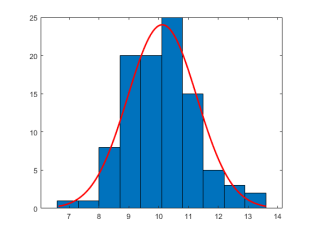
Statistically, one would expect to encounter instances of lower or higher estimates or bids in any geographic market as Xactware’s pricing data reflects the ‘average’ cost/price. A mathematical calculation of a ‘mean’ value from a large sample of data points predictably includes deviations. A higher or lower bid/estimate is not only expected to exist (statistically) but its existence has little to no impact on the validity of Xactware’s determination of ‘average’ costs/prices. The histogram illustrates (horizontal) X-axis values (pricing for example) against Y-axis values (frequency for example). Following the red line, data points would show lower-than-average pricing and higher-than-average pricing. The key here is the frequency to which an average price occurs. Frequency is a reflection of what ‘reasonably’ may be expected.
Appraisal Panel Determines Reasonable Costs (Fair Market Value)
Xactimate is only helpful if an appraiser believes the prices determined by Xactware’s extensive market research are accurate as to what is ‘reasonable.’ Reasonable (the going rate in the market) price/cost is a matter of opinion. Each panel member is entitled to their opinion. The best-supported opinion usually prevails.
Disclaimer
This article is for informational purposes only and not for the purpose of providing legal advice. You should contact your attorney to obtain advice with respect to any particular issue or problem. Use of and access to this article or any of the e-mail links contained within the site do not create an attorney-client relationship between Thomas W. Hamrick and the user or browser. The opinions expressed in this article are the opinions of the individual author and may not reflect the opinions of other lawyers.

 Coffee with Tom